Trip to Gambia
What did I see?
I had the opportunity to visit the haunting remnants of the slave forts, where captured slaves were held before being shipped off on the brutal Middle Passage journey. These forts, steeped in the pain and suffering of countless lives, are a stark reminder of the horrors of slavery. I also visited the renowned James Island, now renamed Kunta Kinte Island, a place forever etched in history. The visit was an incredibly moving experience, deeply harrowing and painful, yet enlightening and spiritual at the same time.
“I lingered in front of rusted chains and iron shackles, struggling to imagine the pain endured by those who once wore them”
What does the Gambia Anti-Slavery Monument represent?
The Gambia Anti-Slavery Monument stands as a powerful symbol of resistance against slavery and a commitment to preventing such atrocities from ever happening again. Built in 1996 by the Arts Council, it is prominently located at the dock, serving as a poignant reminder of the transatlantic slave trade’s painful history. The monument honors the memory of those who suffered while delivering a message of hope and resilience, emphasizing the end of both physical enslavement and the “slave mentality” that sustained oppression. It calls for reflection on the past and a collective pursuit of equality and freedom for all.

The Resistance Movements Against Oppression in the 19th Century

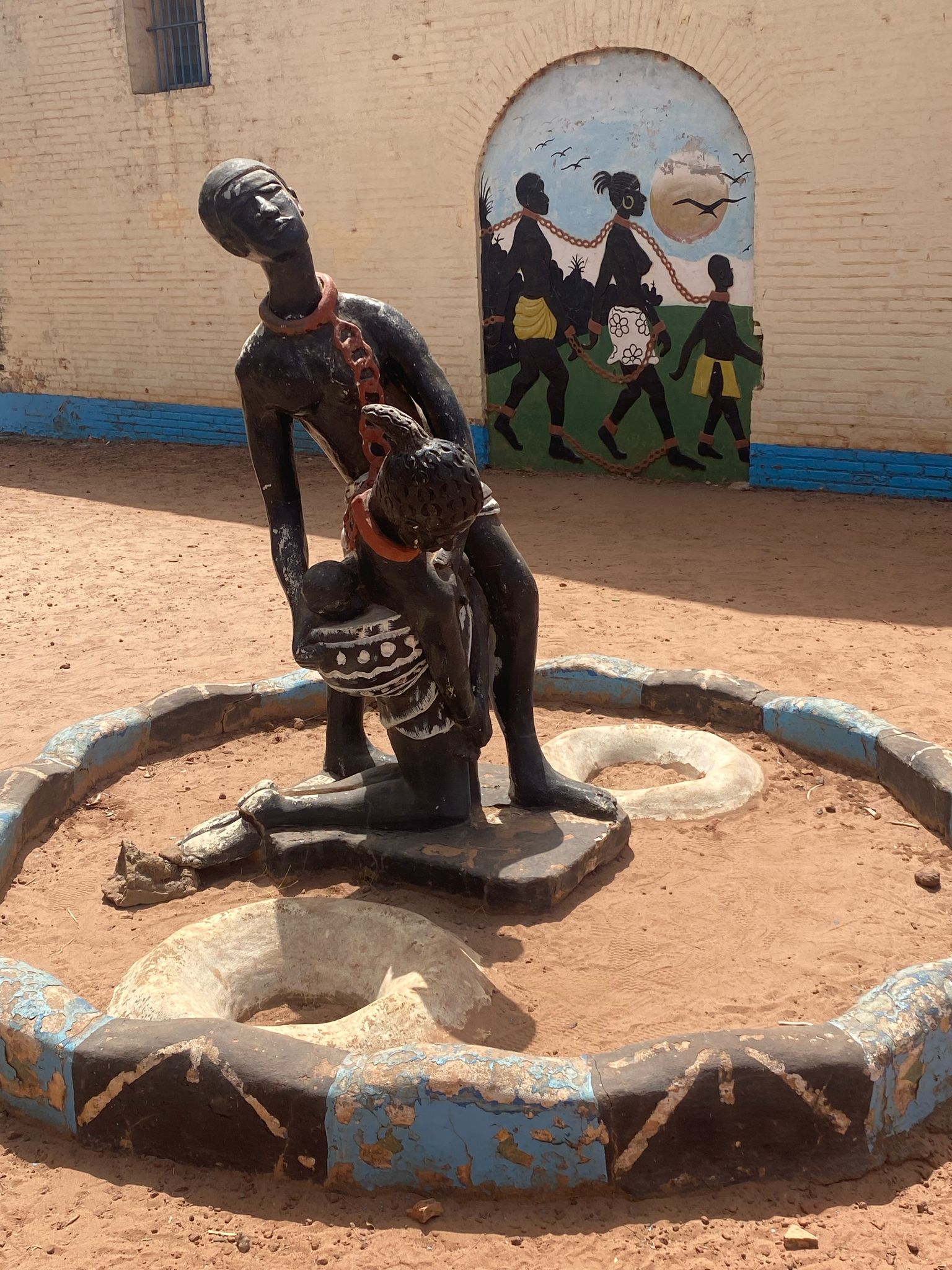
“Never Again”
Visited Albreda slavery Museum
The first stop was the Albreda Slavery Museum, a modest but powerful space filled with haunting artifacts, historical records, and life-sized displays depicting the brutal realities of the slave trade. The air inside felt heavy, as though the walls themselves carried the weight of untold stories.
Why This Dark History Belongs in Education
By learning about these histories, individuals can better understand the roots of modern racial inequality and the importance of promoting justice and equity.
Gambia’s history of slavery serves as a catalyst for healing and reconciliation within the community. Acknowledging the past helps create a platform for dialogue and understanding, allowing descendants of enslaved people and modern generations to come together, reflect on shared histories, and work towards a more inclusive and unified future.