Reclaiming the Narrative: Understanding Black History Beyond Slavery
“Everybody deserves to feel psychologically safe regardless of skin colour.” ——EDP Training Leader Bianca Jones
As I reflect on last year’s Black History Month, I’m reminded of the importance of its theme, “Reclaiming the Narrative.” As an Associate Instructor Member®, I had the opportunity to explore the history, legacy, and impact of this theme, particularly on mental health, and to share my thoughts on how we can all become better anti-racist allies. Looking back, I’m struck by how much work still needs to be done—and how far we’ve come.
What Do We Really Know About Black History?
When I think about how Black History is often taught, it’s hard not to feel frustrated. For so many, Black History begins and ends with slavery, the transatlantic slave trade, or civil rights movements. Many of us recall that one week in school where slavery was briefly discussed, as if that encapsulated the entirety of Black History. But that’s not Black History—it’s White history.
Last year’s theme, “Reclaiming the Narrative,” was a call to correct these historical inaccuracies and shift the focus to the rich, diverse, and nuanced history of Black people that existed long before the transatlantic slave trade. It was about celebrating the full complexity of Black heritage and ensuring that our stories are told accurately and with respect. Reflecting on this, I’m reminded of how much more there is to learn and share.
The Eurocentric Education System in the UK
Looking back, I’m struck by how the UK’s education system has long centred European history, leaving little room for the contributions of marginalised groups. This Eurocentric approach has created significant gaps in our understanding of history. Lavinya Stennett, founder of The Black Curriculum, has highlighted how Black people are often erased from British history, only mentioned in the context of the slave trade. This reinforces the narrative of Black people as victims, leading to internalised racism and undermining self-esteem.
For instance, learning about the Mughal Empire or the Kingdom of Benin challenges the narrow view of Black and Brown people as solely oppressed. Yet, in 2019, only 11% of GCSE students studied modules referencing Black contributions to British history. Reflecting on this, I’m reminded of how much work remains to ensure future generations have a fuller, more inclusive understanding of our past.
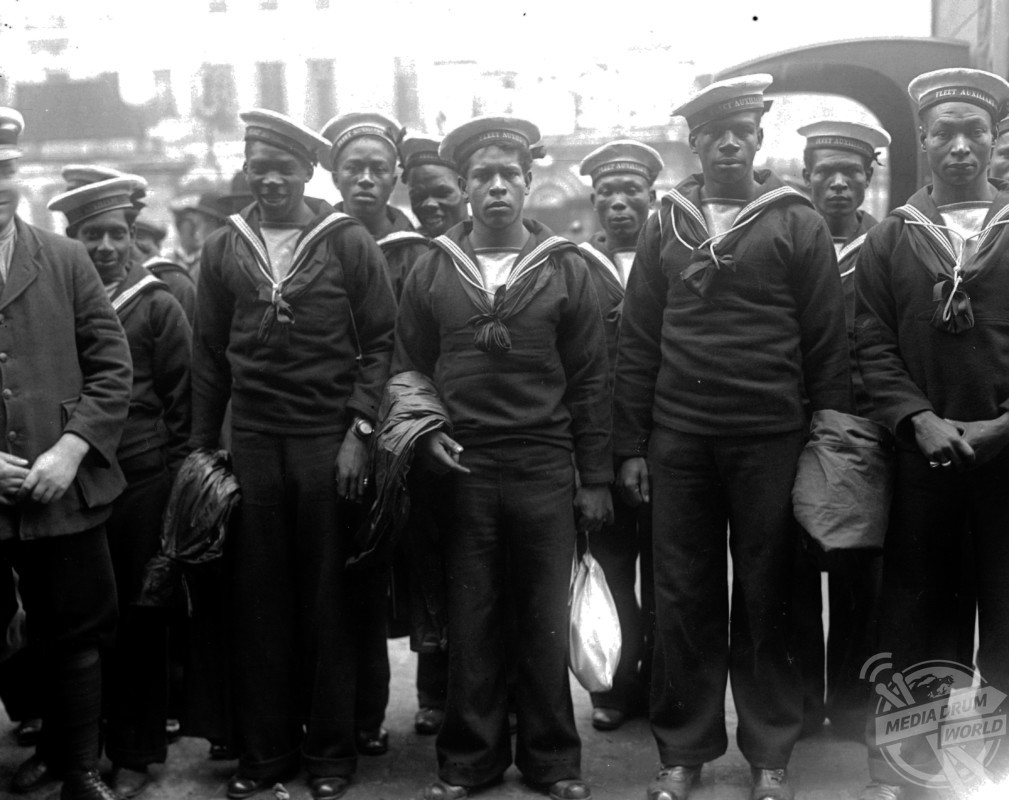
Black British Commonwealth contributions to Britain’s war effort.
The Impact of Historical Narratives on Mental Health
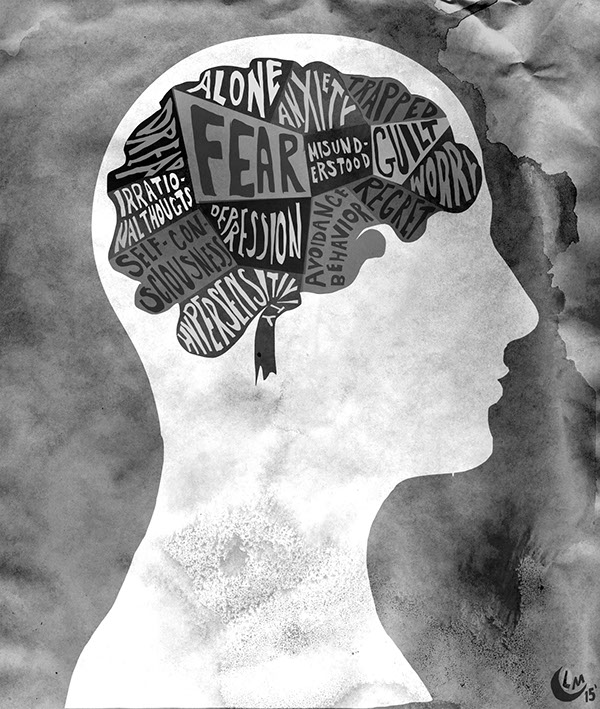
As someone who works in mental health, I’ve seen firsthand how historical narratives and cultural representation shape the mental well-being of racialised groups. In England, Black people statistically face worse outcomes across many institutions, and the misrepresentation or erasure of Black History can exacerbate feelings of marginalisation, low self-esteem, and identity struggles.
These negative impacts can manifest as anxiety, depression, and a disconnection from cultural identity. On the other hand, accurate and positive representations of Black History can foster pride, belonging, and resilience.
Key contributions of Black people in British history
16th Century
The Black community began to form in Tudor-era Britain. For instance, John Blanke was a Black musician at the court of Henry VIII, demonstrating the involvement of Black people in early British culture and the arts.
18th Century
Black activists like Olaudah Equiano and Ignatius Sancho played key roles in the British abolition movement. Through writing and speaking out, they exposed the brutality of slavery, leading to the passing of the 1807 Abolition of the Slave Trade Act.
19th Century:
Industrial Revolution
Black workers participated in the British Industrial Revolution, especially in port cities like Liverpool and Bristol. They worked as sailors, dock workers, and craftsmen, contributing to the economic development of Britain.
19th Century:Victorian Period
During the Victorian era, the Black community grew in Britain, with many African and Caribbean immigrants arriving. Notable Black activists such as Mary Seacole played a vital role by providing medical aid during the Crimean War, showcasing the significant contributions of Black women in British history.
1914–1918:
World War I
Over 15,000 Caribbean and African soldiers served in the British military during World War I, contributing significantly to the war effort, both on the Western Front and in logistical support.
1939–1945:
World War II
Over 600,000 Black soldiers and workers fought for Britain during World War II, including soldiers from the Caribbean, Africa, and India. They participated in major campaigns such as the D-Day landings and the Burma campaign.
1940s–1950s:Windrush Generation
After the war, large numbers of Caribbean immigrants (known as the “Windrush Generation“) arrived in Britain to help rebuild the economy. They filled labor shortages in sectors such as healthcare, transportation, and manufacturing.
20th Century:
Cultural Influence
Black artists, musicians, and writers like Samuel Selvon, Zadie Smith, and Steve McQueen enriched British cultural life. Music styles such as reggae, hip-hop, and calypso also had a profound impact on British pop culture.
21st Century
Black people continue to play a significant role in politics, sports, science, and the arts in Britain. For example, Stormzy has used his music and activism to promote racial equality, while Marcus Rashford has worked to combat child poverty through charity efforts.
The test to assess the health of newborns is not suitable for those with darker skin tones. Bianca has been invited to provide a professional comment.
The Medical Gap and Historical Inequities
Reflecting on the medical field, I’m reminded of how the medical establishment was built during a time of slavery and segregation, and how its teachings reflected these inequalities. It wasn’t until 2020 that a medical textbook was published showing skin conditions on Black and Brown skin. Reclaiming the narrative means acknowledging these gaps and ensuring that medical education includes diverse perspectives and experiences.
The Legacy of Racism in Health Statistics Today
3.5 times
In March 2023, Black people were 3.5 times more likely than White people to be detained under the Mental Health Act.
3%
Black doctors make up only 3% of NHS consultants, the most senior medical positions.
1.7%
Just 1.7% of registered practitioner psychologists in the UK identify as Black.
7 times
Black people are over seven times more likely to be placed on a Community Treatment Order (CTO) than White people.
5 times
Black women in the UK are five times more likely to die during pregnancy, childbirth, or postpartum than White women.
Black People and Mental Health
These broken narratives contribute to society today, sending a subtle but overt message that “you do not belong.” The lack of mental health support for freed enslaved Africans has led to generational trauma, which still affects the mental health of Black people today. Addressing these historical and ongoing injustices is crucial for improving mental health outcomes and creating a more inclusive society.
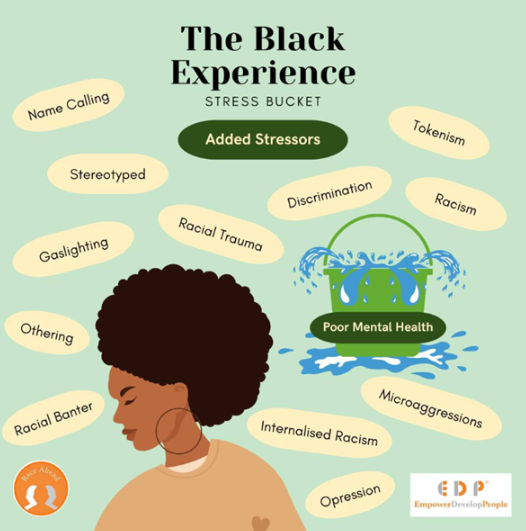

The role of Mental Health First Aid and MHFA England
MHFA England®’s vision is to improve the mental health of the nation including Black people. However, prejudice, discrimination, and systemic racism create barriers and inequalities in the mental health system, resulting in poorer outcomes and wider health disparities for Black people.
Black people also face additional stresses such as tokenism, microaggressions, gaslighting, oppression, barriers to access, ongoing exclusion, deprivation, and lower socioeconomic status, all of which compound the impacts of racism on mental health.
MHFA England plays a crucial role in supporting mental health within the Black community. Our initiatives focus on cultural competence and sensitivity, ensuring that mental health support is accessible and effective for everyone. As well as our plenaries and Race Equity training, we have taken a number of actions to become actively anti-racist:
-
We published a Statement of Intent where we committed to being an anti-racist organisation and called on other organisations to actively tackle racism.
-
We have produced free guidance for workplaces to support the mental health of People of Colour and Black colleagues.
-
We have adopted the Halo Code to prevent race-based hair discrimination.
-
We have been awarded Race Equality Matters Trailblazer Silver status for our work in tackling race inequality.
-
Our My Whole Self campaign calls on organisations to empower employees to bring their ‘whole self’ to work, because good mental health is good for business. This includes calling on employers to become actively anti-racist.
Ready to become a mental health advocate and champion change? Learn how to better Mental health self-care support your students, colleagues, clients, patients, friends or family?
Be certified! Take our Mental Health First Aid Course
Sign up today!
Sources
(1) The Black Curriculum, Re-imagining the future of education through Black British History. Available from: https://theblackcurriculum.com/ [24.09.2024].
(2) BBC Bitesize, How the Mughal empire began. Available from: https://www.bbc.co.uk/bitesize/articles/z8jcdnb#zdq4wsg [24.09.2024].
(3) BBC Bitesize, The Kingdom of Benin. Available from: https://www.bbc.co.uk/bitesize/articles/z3x4r2p#zrh896f [24.09.2024].
(4) Athiei Ajuong, Could racism be address through education? Available from https://www.blackhistorymonth.org.uk/article/section/bhm-for-schools/could-racism-be-addressed-through-education/ [24.09.2024]
(5) Commonwealth War Gaves Commission, Black stories from World War Two you might know. Available at https://www.cwgc.org/our-work/blog/black-stories-from-world-war-two-you-might-not-know/#:~:text=They%20came%20from%20across%20the,idea%20of%20their%20wartime%20experience. [24.09.2024]
(6) NHS Digital. Detentions under the Mental Health Act. Gov.UK. 2024
(7) Parliament of the United Kingdom. Mental Health Act 1983. 1983
(8 & 9) Health & Care Professions Council. HCPC Diversity Date Report 2021. 2021
(10) Office for National Statistics. Ethnic group, England and Wales: Census 2021. 2022
(11) Mind, Mind responds to annual Mental Health Act statistics. Available from https://www.mind.org.uk/news-campaigns/news/mind-responds-to-annual-mental-health-act-statistics-1/#:~:text=Black%20people%20are%20now%20over,to%20963%20in%202023%2F24. [24.09.24]
(12) Woman’s Hour, Black women are five times more likely to die in pregnancy, birth or postpartum that White women. Why? Available at https://www.bbc.co.uk/programmes/m0006sg5. [24.09.24]